Bali Open for International Tourism: Best Time to Visit Post-Reopening

Bali Open for International Tourism means Bali‘s borders have been fully open to international visitors for several years now, and the island has settled into a rhythm that’s quite different from its pandemic-era quiet spells. With entry rules simplified and Quality Tourism initiatives reshaping how the island manages visitor numbers, the real question for Australians these days isn’t whether Bali is open it’s when to go for the best combination of weather, crowds, and value.
Here’s a season-by-season breakdown to help you time your trip.
Bali’s Two Seasons
Bali runs on a tropical climate with two broad seasons rather than four:
- Dry season April to October, with sunny days, lower humidity, and cooler evening breezes
- Wet season November to March, bringing short, sharp tropical downpours rather than all-day rain
Temperatures stay fairly consistent year-round, generally in the high-20s to low-30s Celsius, so the real difference between seasons comes down to rainfall, crowd levels, and price.
Shoulder Season: April and October
April and October sit right at the edges of the dry season. The weather is still largely favorable, with occasional rain starting to creep in by late October, but prices ease further, and the island feels noticeably calmer. October also lines up with harvest season in the rice-growing regions, adding some extra color to an Ubud day trip.
Peak Season: July and August
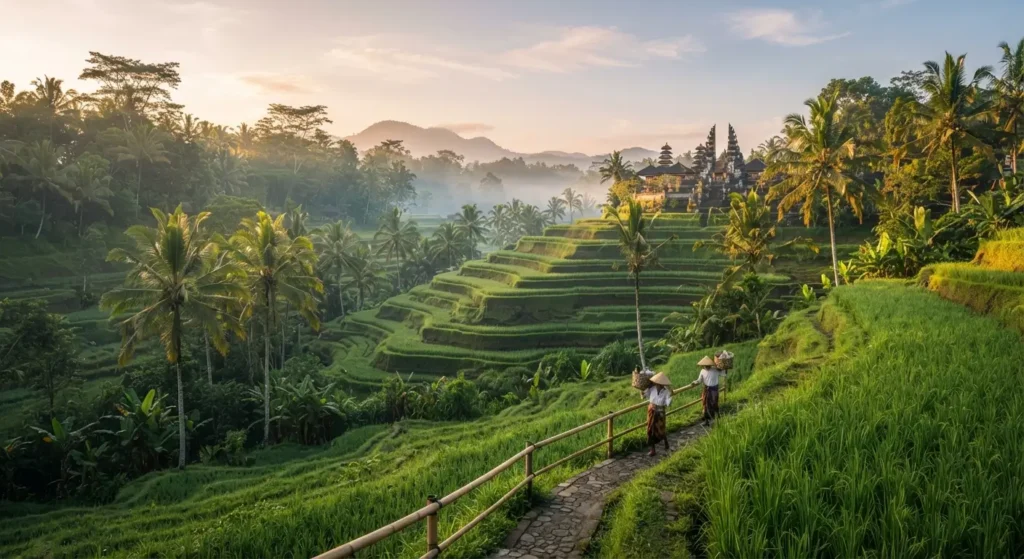
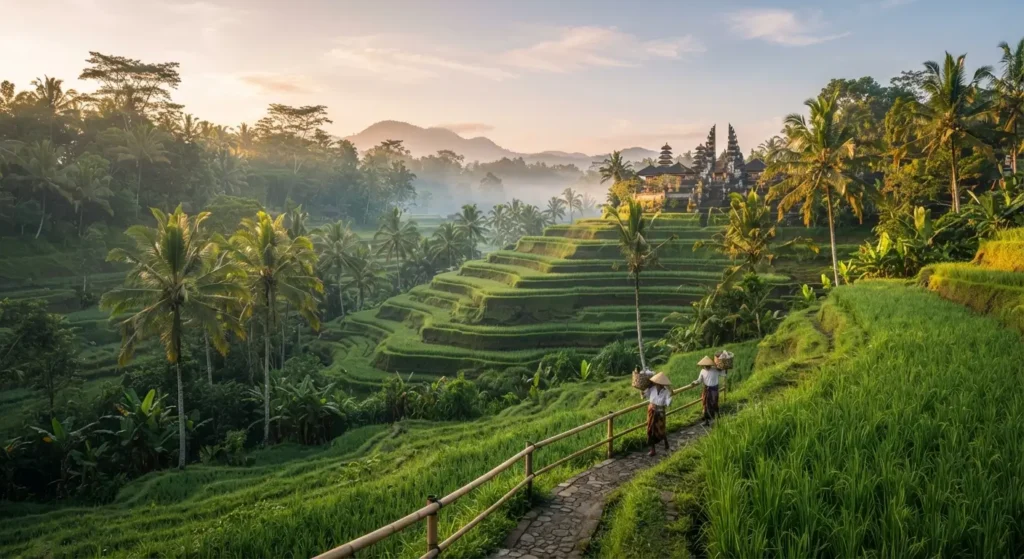
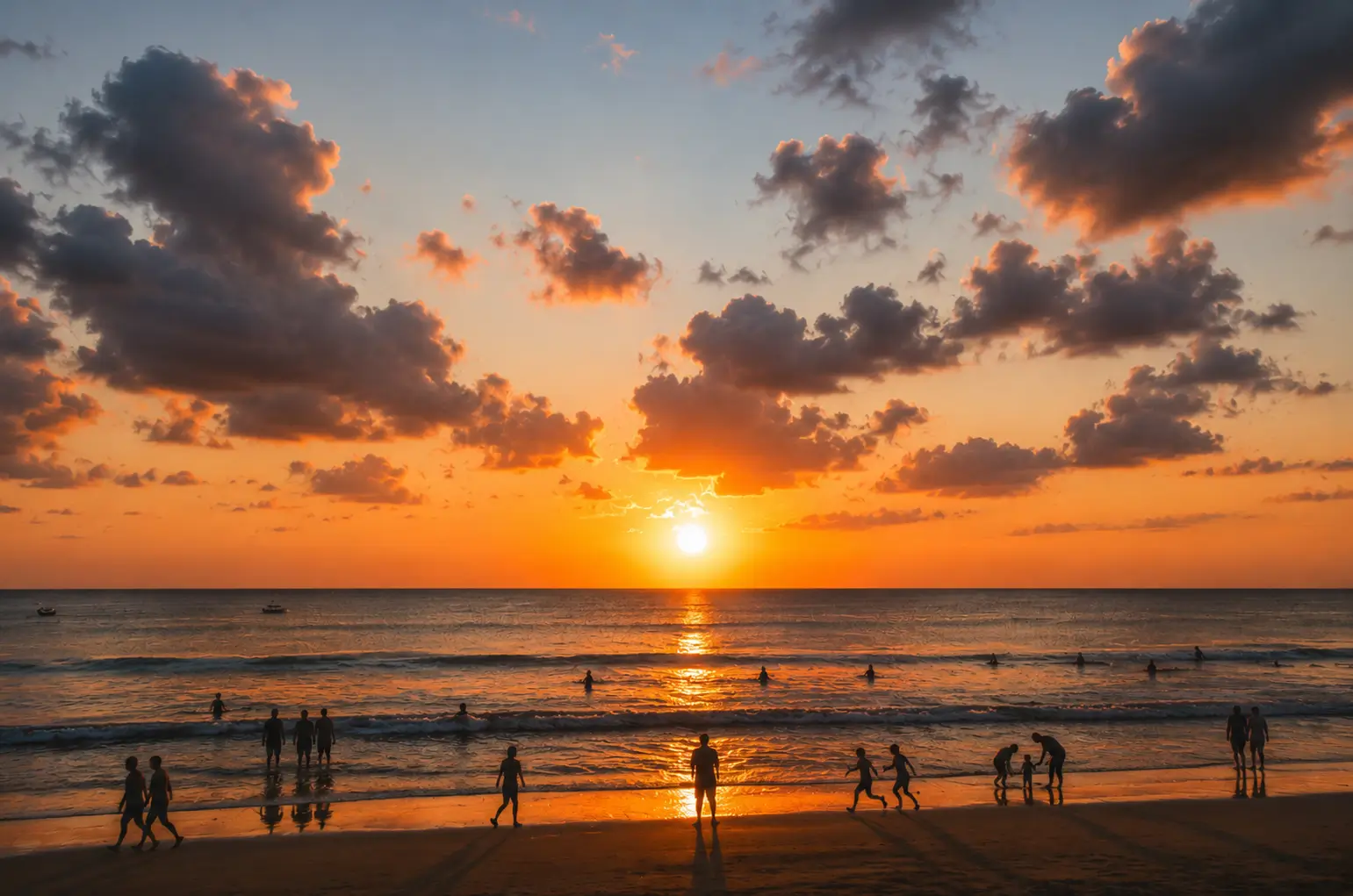
July and August sit at the heart of Bali’s high season, when international school holidays overlap and the island’s weather is at its most reliable. Expect long sunny days, calm surf conditions, and buzzing beach clubs but also the highest accommodation and flight prices of the year, plus queues at popular spots like Tegalalang’s rice terraces and Uluwatu’s clifftop temples.
If you want the classic postcard version of Bali and don’t mind sharing it with a crowd, this is when to book. If you’d rather avoid the squeeze, keep reading.
The Sweet Spot: May, June, and September
Travel sites and locals alike tend to agree on this one: May, June, and September consistently come out as the best all-round months to visit. You get dry-season weather without July and August’s peak crowds or prices, which are typically 20–30% lower than high season. September in particular has a reputation as an underrated month with the same reliable sunshine, but noticeably thinner crowds and easier restaurant bookings.
The main thing to watch for in this window is school holiday overlap even shoulder months can spike in price and crowd levels if they coincide with Australian term breaks.
Wet Season: November to March

Wet season doesn’t mean written-off it means a different kind of trip. Rain typically falls in short, intense afternoon bursts rather than lasting all day, and landscapes turn a much deeper green, which photographs beautifully at spots like Tegalalang and Bali’s waterfalls. December and January tend to be the wettest months, while February and March start to dry out again.
This is also the best-value stretch of the year, with hotel rates often discounted well below dry-season pricing. It suits travellers who don’t mind adjusting plans around an afternoon shower and who’d rather spend on spa days, cooking classes, or indoor activities than outdoor adventure sports.
Matching the Season to Your Trip
- First-time visitors wanting reliable weather aim for May, June, or September
- Budget-conscious travellers look at the wet season, particularly January to March
- Surfers and divers dry season swells and calmer waters favour April to October
- Honeymooners and couples late April to mid-June, or late August to early October, balance good weather with fewer crowds
- Families working around school holidays the dry season overlaps naturally, so book well ahead for July and August
What “Open for Tourism” Looks Like in Practice Today
Bali’s post-reopening experience has been shaped as much by policy as by season. Entry has simplified considerably a single digital arrival card now replaces what used to be several separate immigration, customs, and health forms, and the e-VOA process lets eligible travellers pre-register for biometric autogates rather than queuing at a manual counter.
At the same time, Bali’s quality tourism push has introduced measures aimed at managing visitor impact rather than simply maximising numbers from the standing tourism levy funding conservation projects to tighter enforcement around common traveler issues like unlicensed scooter rentals. None of this makes the island harder to visit; if anything, it’s made the arrival process faster while keeping popular sites less overwhelmed than they might otherwise be during peak months.
Planning Around the Calendar
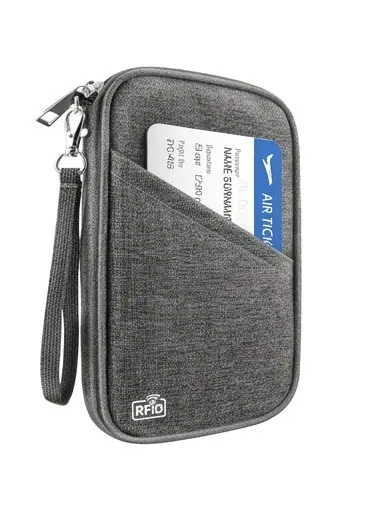
Whichever season suits your trip, booking flights and accommodation early still matters especially for July, August, and the December–January holiday stretch, when both flights and villas fill up fastest. Compare flight and accommodation options for your Bali trip on airdealio.com, and check out our Travel Essentials range to make sure you’re packed right for whichever season you land in.