About Melbourne
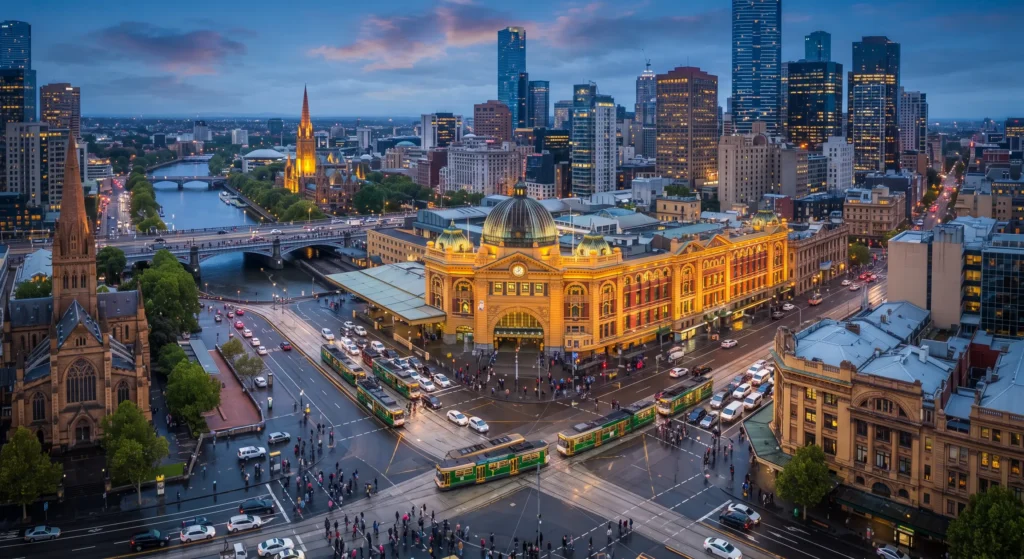
Melbourne is the city that quietly wins people over. Nobody books a ticket for a famous landmark. They come for the coffee, the laneways, the football-obsessed pubs and the feeling that something interesting is happening around every corner, then leave a week later wondering why they didn’t plan more time. It’s also one of the easiest big cities in Australia to reach. The Sydney to Melbourne route is one of the busiest in the world, flights leave every few minutes, and international carriers connect it to Asia, the Pacific and beyond. Getting here is the simple part. What you do once you’ve landed is where it gets fun.
Getting There
If you’re flying from Sydney, Brisbane or Canberra, you’re looking at a short hop, usually around 90 minutes to two hours. Competition on these routes is fierce, which is good news for your wallet. Midweek flights, especially Tuesday and Wednesday, tend to be noticeably cheaper than Fridays and Sundays, and booking a few weeks ahead usually beats leaving it to the last minute.
Most flights land at Melbourne Airport (Tullamarine), about 25 minutes from the city by road. The SkyBus runs to Southern Cross Station around the clock and costs a lot less than a taxi. Some budget carriers also use Avalon Airport, which is closer to Geelong than to Melbourne. It can mean a cheaper fare, but check the transfer time before you celebrate.
Which Part of Melbourne Should You Stay In?
The mistake most visitors make is booking a hotel without checking the map, then wondering why everything feels so far away. Melbourne is spread out, and each area has its own personality.
- The CBD: The easiest base for a short stay. Trams, laneways, restaurants and the train station are all within walking distance. It’s busy on weekdays and a bit quiet late on Sundays.
- Fitzroy and Collingwood: Independent shops, vintage stores, live music and brunch spots with queues out the door. If you want to feel like you’re living in Melbourne rather than visiting it, start here.
- St Kilda: A beachside suburb with a faded seaside charm, a famous pier and cake shops that have been around forever. It’s relaxed, slightly scruffy in a charming way, and a tram ride away from the city.
- South Yarra and Southbank: Polished, upmarket and close to the river, the Botanic Gardens and the big arts venues. A good pick if you prefer comfort over character.
Eat and Drink Like You Live Here
Melbourne takes its coffee seriously, and that isn’t marketing talk. A flat white from a tiny laneway café is a better introduction to the city than any attraction. Bring an appetite after that, because the food scene is built on migration. Greek on Lonsdale Street, Vietnamese in Footscray and Richmond, Italian in Carlton, dumplings in Chinatown, and everything in between. Queen Victoria Market is a good place to graze, especially on a weekend morning.Locals joke that Melbourne has four seasons in one day, so pack a windproof travel umbrella to keep a sudden shower from spoiling your plans. Planning to explore on foot? A pair of anti-blister walking socks keeps you comfortable from the CBD to the laneways.
Pro tip: some of the best places have no signage. If you see a staircase or an unmarked door in a laneway and a few people looking at their phones, you’re probably in the right place.
Things Worth Doing
You don’t need a long list. A few things really do deserve your time.
- Wander the laneways. Hosier Lane for street art, Degraves Street for coffee, Centre Place for people-watching. Take your time and let yourself get a bit lost.
- Catch a footy game. Even if you don’t understand the rules, an AFL match at the MCG is one of the great Australian experiences.
- Take a day trip. The Great Ocean Road is the classic, though it’s a long day and worth doing with an early start. Phillip Island and the Yarra Valley are easier options if you’re short on time.
- Use the free tram zone. Trams within the city centre cost nothing, and they’re the easiest way to see the CBD without wearing out your shoes.
When to Go
Melbourne is famous for four seasons in one day, so bring a jacket whatever the month. Summer (December to February) is warm and lively, with the Australian Open in January. Autumn (March to May) is arguably the best time to visit, mild and golden, with plenty of food festivals. Winter is cold and moody, but it brings cosy bars, fewer crowds and cheaper accommodation. Spring means the Melbourne Cup in early November, and fares and hotels go up with it, so book early if you’re coming then.Your next adventure could start right here. Compare Melbourne to Bali flights.
Frequently asked questions
How long should I spend in Melbourne?
Three to four days covers the highlights. Add two more if you want a day trip.
Is Melbourne better than Sydney?
Different, not better. Sydney has the harbour and beaches. Melbourne has the food, coffee and culture.
What's the cheapest time to fly to Melbourne?
Winter, particularly June to August, tends to be the cheapest. Avoid school holidays and major event weekends.
Do I need a car?
Not in the city. Trams, trains and walking cover almost everything. Hire one only for day trips like the Great Ocean Road.
Which airport should I choose, Tullamarine or Avalon?
Tullamarine for convenience, Avalon only if the fare saving outweighs the longer trip into town.